
Cabling That Supports Every System You'll Add
Structured Cabling in Lake Forest for commercial properties requiring high-bandwidth infrastructure and technology expansion capacity
Turn Up Communications installs and terminates structured cabling systems throughout Lake Forest and surrounding Orange County areas, creating the physical infrastructure that supports network, security, surveillance, and telecommunications equipment. Category 6A and Category 7 cabling delivers the bandwidth necessary for high-speed data transfer, HD surveillance feeds, and voice-over-IP systems in competitive commercial environments. Your building's ability to support current operations and future technology upgrades depends on pathway planning, proper termination standards, and certified installation practices.
Structured cabling differs from point-to-point wiring by establishing a central distribution system where all cables terminate at patch panels in a communications room, allowing you to reconfigure connections without running new cable through walls. Orange County businesses face ongoing technology demands, and Category 6A cabling handles 10-gigabit speeds over longer distances, preventing the need to re-cable when bandwidth requirements increase. The infrastructure serves multiple systems simultaneously—data networks, IP cameras, access control readers, paging systems, and telephony—all routed through the same organized framework.
Schedule a site survey to map pathway routes and determine cable specifications based on your facility layout and equipment requirements.

How Installation Standards Affect Long-Term Performance
Cable installation begins with pathway planning that accounts for electrical interference, bend radius limits, and future access to cable runs inside walls, above ceilings, or through conduit. Each cable is pulled without exceeding tension limits, terminated at both ends using punch-down or modular connectors, and tested for continuity, crosstalk, and signal attenuation. Certification documentation verifies that each cable run meets TIA/EIA standards for the specified category, which directly affects whether your network equipment can operate at rated speeds.
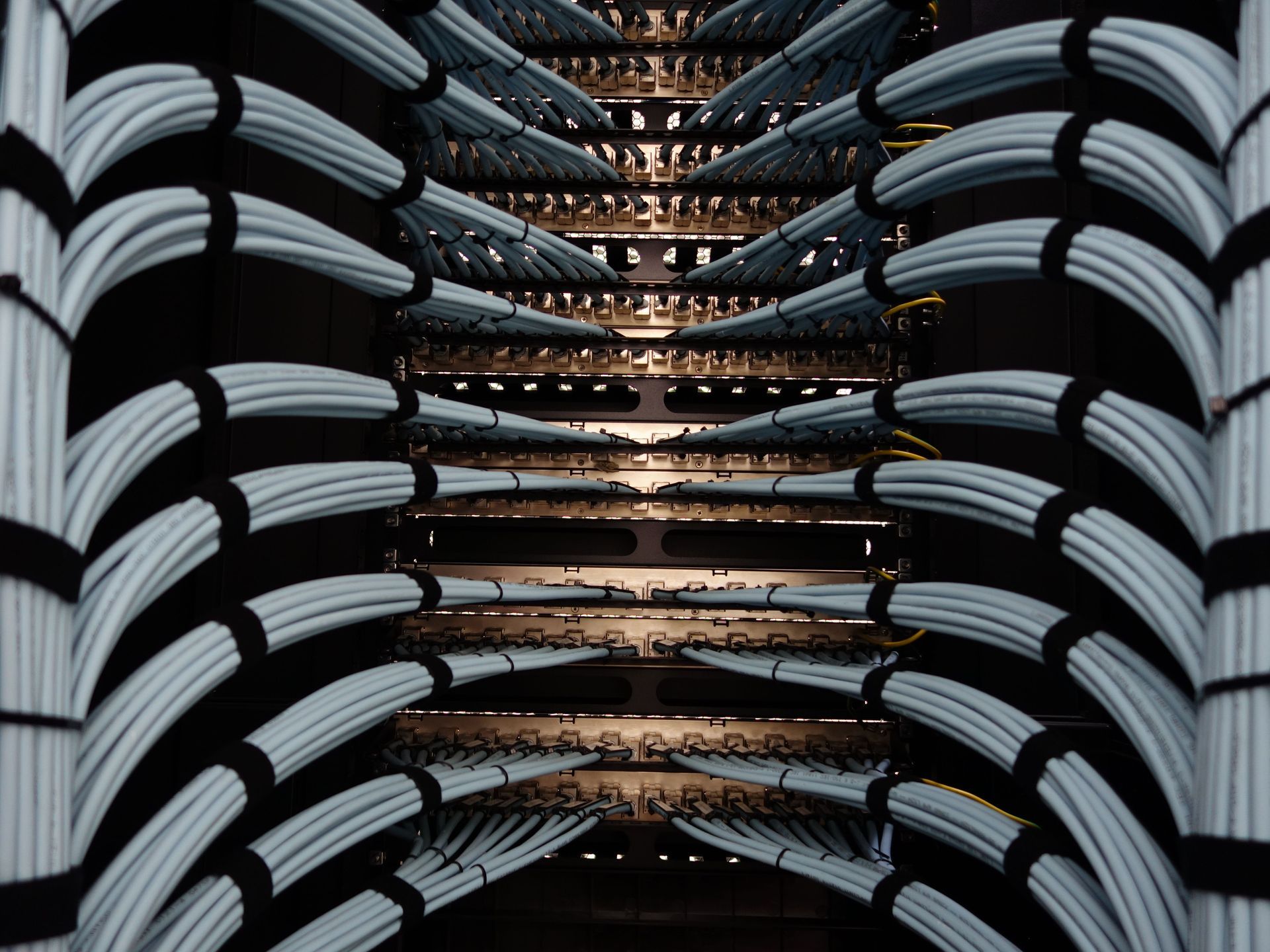
After termination and testing, you'll notice organized patch panels with labeled ports that correspond to wall outlets throughout your facility, making it simple to trace connections and troubleshoot issues. Network switches connect to the patch panel rather than directly to wall outlets, so adding or relocating equipment requires only a patch cable change in the communications room. Structured systems eliminate the tangled point-to-point wiring that complicates moves, adds downtime, and requires additional labor every time equipment locations change.
Installation includes labeling every cable at both termination points, documenting cable routes in a site map, and providing test reports that verify each run's performance. Conduit placement protects outdoor cable runs from UV exposure and physical damage, and plenum-rated cable is required in air-handling spaces to meet California fire code. Projects in Irvine, Laguna Hills, Mission Viejo, and Rancho Santa Margarita follow the same standards to support long-term infrastructure reliability.
What You Should Know Before Installation
Structured cabling projects involve planning decisions that affect both immediate functionality and future flexibility. The questions below address factors that commonly come up during site evaluations.
What determines whether Category 6A or Category 7 cabling is needed?
The choice depends on planned data speeds, cable run distances, and whether your facility will support 10-gigabit or higher network equipment; Category 6A handles most commercial applications up to 100 meters, while Category 7 offers better shielding for high-interference environments.
How long does structured cabling installation take for a typical office building?
Installation timelines depend on the number of drops, pathway complexity, and whether walls are open or closed; a 20-drop office typically requires two to three days for cable runs, termination, and testing.
What happens if cables need to be added after the initial installation?
Structured systems allow new cables to follow existing pathways and terminate at the same patch panel, so adding capacity requires less labor than the original installation; planning for extra conduit space and panel capacity reduces future costs.
Why does proper termination technique matter for network performance?
Untwisting cable pairs beyond specification limits, over-tightening termination screws, or failing to maintain twist rates increases crosstalk and signal loss, preventing gigabit speeds even when the cable itself is rated correctly; certification testing identifies these issues before equipment goes live.
What documentation should I receive after installation?
You'll receive a site map showing cable routes, a test report for each cable run verifying performance standards, and labeling that matches wall outlets to patch panel ports; Lake Forest facilities benefit from organized documentation when expanding systems or troubleshooting connectivity issues years after installation.
Turn Up Communications provides certification documentation and labeling that supports system management long after installation is complete. Request a facility assessment to review pathway options and cable specifications tailored to your current equipment and planned technology upgrades.