
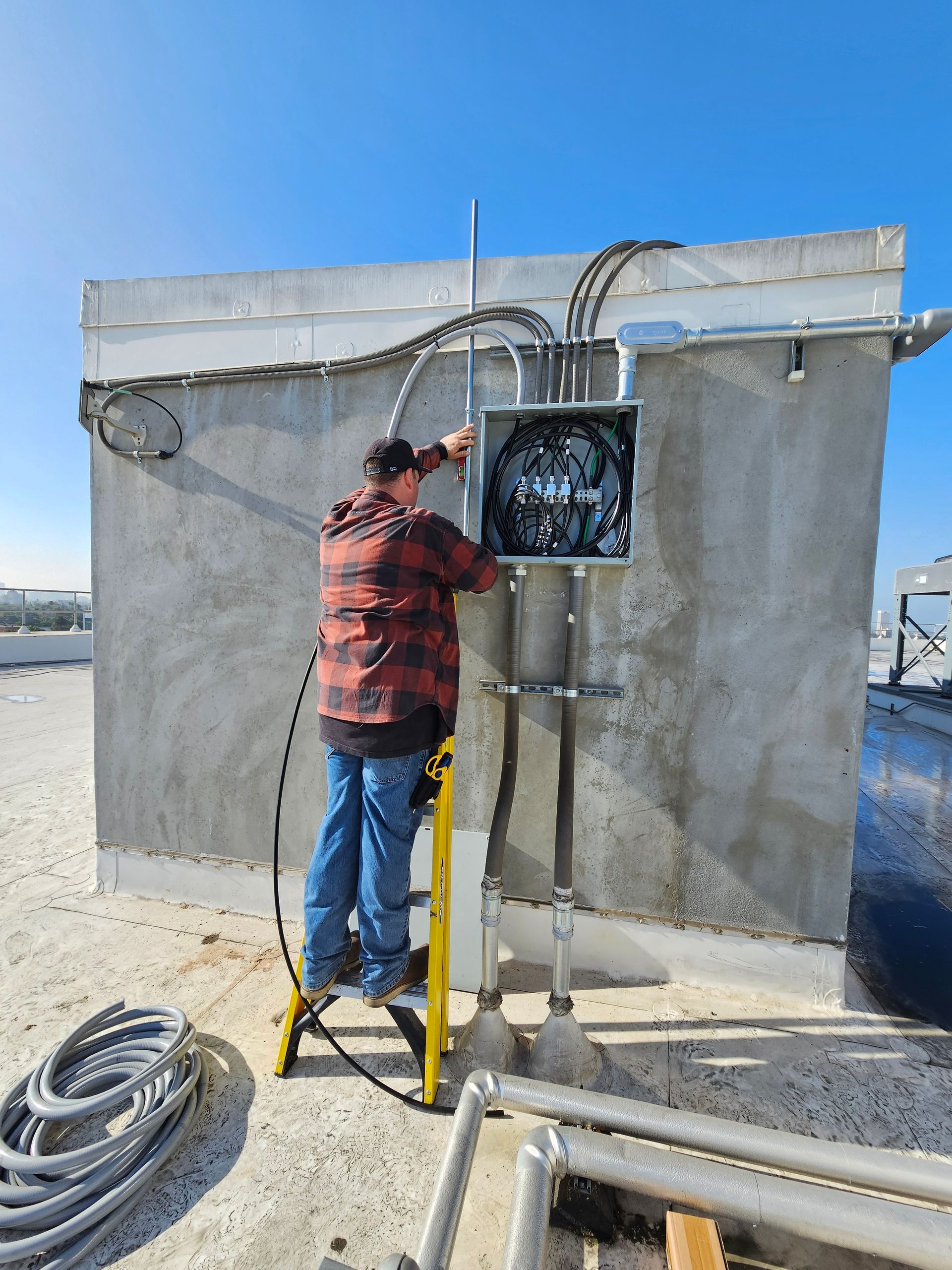
Rapid Response When Systems Fail
Emergency Service in Lake Forest for security, access control, paging, and cabling failures that disrupt operations or building security
A failed access control system locks employees out or allows unauthorized entry, a downed security camera leaves blind spots, and severed network cables halt all connected equipment—these failures cannot wait for standard business hours when they directly affect operations, security, or tenant safety. Turn Up Communications provides emergency repair and restoration services across Lake Forest and Orange County for low-voltage systems that fail outside normal operating hours or require urgent attention to prevent further disruption. After-hours call response, rapid diagnostics, and temporary bypass configurations restore functionality while permanent repairs are planned, and parts replacement happens on-site when components are available or through expedited sourcing when specialized equipment is needed.
Emergency service differs from routine maintenance by prioritizing speed over comprehensive upgrades—the goal is restoring immediate functionality so operations can continue while long-term improvements are scheduled separately. Diagnostics begin with isolating whether failures originate from damaged cabling, failed power supplies, configuration errors, or component malfunctions. Temporary repairs might involve rerouting connections through backup pathways, replacing damaged cable segments with surface-mounted runs, or substituting compatible components to restore partial system operation until permanent parts arrive.
Call our emergency line when system failures require immediate attention outside standard business hours or during operational disruptions that cannot wait.

The Difference Between Emergency and Scheduled Repairs
Emergency response starts with understanding what systems are affected, which functions remain operational, and whether the failure creates security vulnerabilities or workflow disruptions. On-site diagnostics identify root causes—physical damage from construction activity, power surges that damage equipment, configuration changes that disable connections, or component end-of-life failures. Temporary solutions focus on bypassing damaged sections, substituting available equipment, or reconfiguring systems to restore critical functions even if full capacity isn't immediately achievable.
After emergency service, you'll notice that critical systems operate again, though possibly with reduced capacity or temporary workarounds until permanent repairs are completed. Access control readers reconnect and badge transactions process, security cameras transmit footage to recording servers, paging systems broadcast announcements, and network cables restore connectivity to disconnected equipment. Temporary cable runs may follow surface pathways instead of concealed routes, and substitute components may lack advanced features available on original equipment, but operations continue without extended downtime.
Full system testing after emergency repairs verifies that temporary configurations function correctly and identifies any remaining issues that require follow-up work. Documentation records what was repaired, what remains temporary, and what permanent upgrades or replacements should be scheduled. Facilities across Irvine, Mission Viejo, Newport Beach, Laguna Hills, and Dana Point rely on emergency service availability when low-voltage system failures threaten operational continuity or building security during critical periods.
What Property Owners Usually Ask
Emergency service involves balancing speed, cost, and permanent solutions under urgent conditions. These questions address decision points that commonly arise during after-hours failures.
What qualifies as an emergency rather than a routine service call?
Emergencies involve system failures that prevent building access, create security vulnerabilities, halt critical communications, or disable equipment necessary for ongoing operations; issues that can wait until the next business day without operational or security impact typically fall under routine service.
How quickly can emergency response arrive after calling?
Response time depends on current call volume, technician location, and travel distance, but most Lake Forest emergency calls receive on-site response within two hours; complex diagnostics or parts procurement may extend total resolution time beyond initial arrival.
Why do emergency repairs sometimes require follow-up work?
Emergency repairs prioritize restoring functionality using available methods and materials, while permanent solutions may require parts ordering, concealed cable routing, or system reconfiguration best handled during planned downtime; temporary fixes prevent extended outages while proper repairs are scheduled.
What types of system failures require emergency service most often?
Common emergencies include severed cables during construction, failed power supplies that disable multiple devices, access control failures that lock out employees, and security camera outages that create unmonitored zones; weather events and power surges also generate clusters of emergency calls.
How much does emergency service cost compared to scheduled repairs?
Emergency service includes after-hours labor rates, expedited travel, and prioritized response that typically costs more than scheduled work; the cost trade-off balances higher service fees against operational losses or security risks from extended downtime.
Turn Up Communications maintains 24/7 availability for low-voltage system failures across security, access control, cabling, and communications infrastructure. Keep our emergency contact information accessible so your facility can reach us immediately when urgent failures occur that cannot wait for standard business hours.