
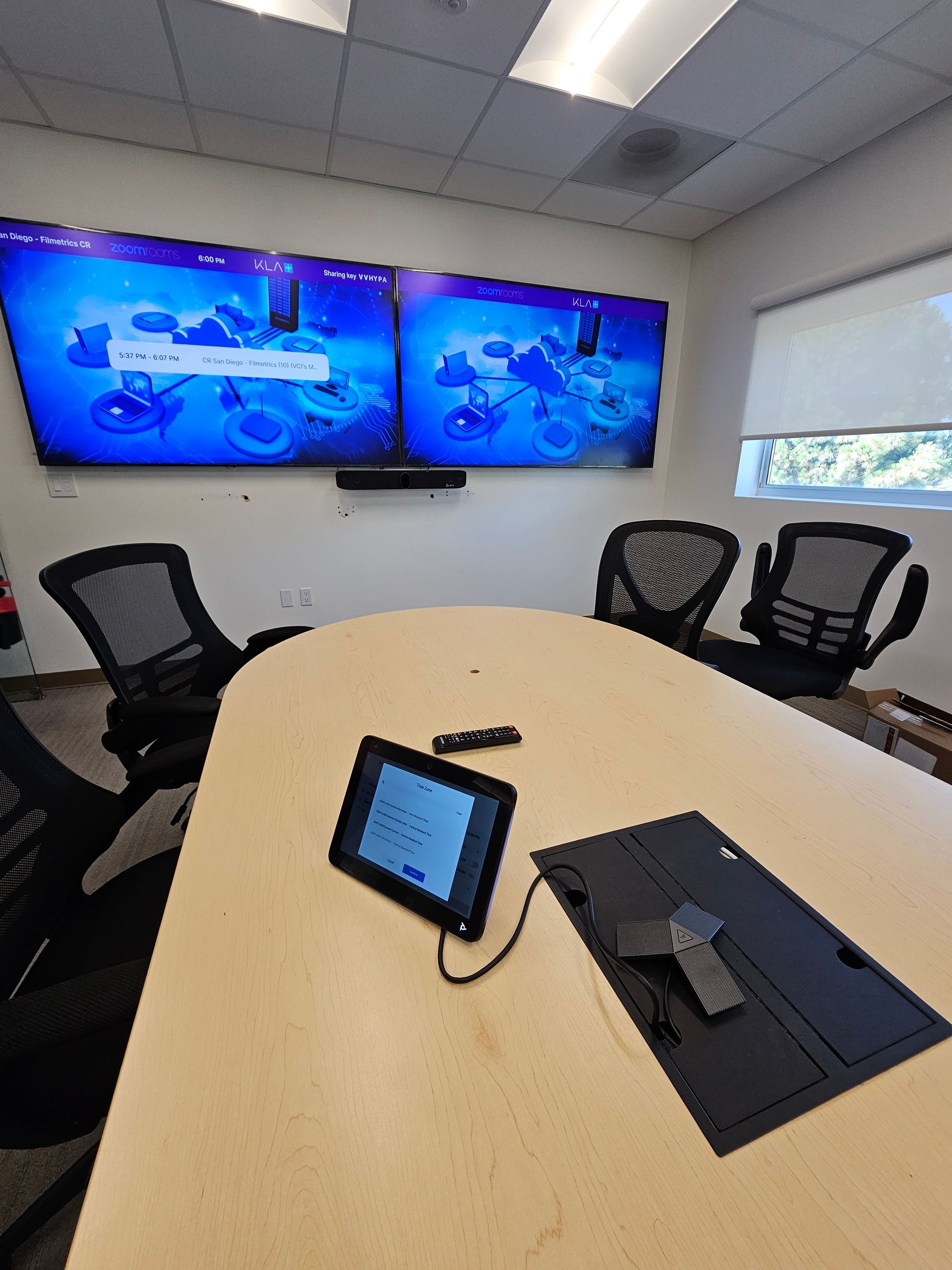
Display and Audio Coordination That Functions Together
Audio Visual Installation in Lake Forest for conference rooms and retail environments requiring synchronized presentation systems
Conference rooms, retail displays, and hospitality venues throughout Orange County require audio and visual systems that operate as unified infrastructure rather than independent components managed separately. Turn Up Communications integrates displays, projectors, audio equipment, and control systems for commercial spaces where presentations, customer engagement, or information displays depend on coordinated AV functionality. Display mounting positions screens for viewing angles that prevent glare or obstructed sight lines, HDMI and network signal routing delivers video without latency or resolution loss, control system programming allows single-touch operation of multiple devices, and audio-visual synchronization eliminates the lag between sound and image that disrupts professional presentations.
Audio visual integration begins with evaluating room dimensions, lighting conditions, and usage patterns to determine display size, projector throw distance, speaker placement, and control interface location. Installers prepare wall surfaces for mounting hardware, route cabling through conduit or concealed pathways, configure devices for networked control, and calibrate display settings for ambient light conditions specific to your environment.
Schedule a consultation to assess your current AV setup and identify integration opportunities for simplified operation.

What Changes After AV Systems Are Integrated
You receive installations where displays are positioned at heights and angles that accommodate seated and standing viewers, cable routing remains hidden within walls or furniture to prevent tripping hazards and equipment damage, and control systems consolidate multiple remotes or interfaces into single-touch operation that eliminates the confusion of managing separate audio, video, and lighting devices. Audio and visual components are synchronized so sound output matches on-screen action without perceptible delay, and networked control allows adjustments from tablets or wall-mounted panels rather than accessing individual equipment.
After integration is complete, you start presentations without troubleshooting signal routing or input selection, adjust volume and display brightness from centralized controls, and switch between content sources without reconfiguring connections or restarting devices. Conference rooms with integrated AV eliminate the delays caused by participants struggling with incompatible adapters, incorrect input settings, or audio that fails to output through the correct speakers.
System complexity scales with the number of input sources you need to accommodate, the size and resolution of displays required for viewing distance in your space, and whether you require wireless presentation capability or rely exclusively on wired connections. Retail environments often require content scheduling so displays automatically switch between promotional videos, product information, and live feeds without manual intervention.
Common Questions About AV Integration
Businesses throughout Irvine, Newport Beach, and Lake Forest depend on AV systems for presentations and customer engagement, and understanding what integration involves helps you plan for systems that operate reliably without constant technical support.
What does audio-visual synchronization involve during installation?
Synchronization requires configuring devices to process audio and video signals at matched rates, adjusting delay settings to compensate for processing lag in different components, and testing playback to confirm sound output aligns with on-screen action during live presentations or recorded content.
How are control systems programmed for multi-device operation?
Programming maps user commands to specific device functions, creates single-button macros that execute multiple actions like powering on displays, selecting inputs, adjusting volume, and lowering shades, and organizes controls into intuitive interfaces that non-technical users can operate without training.
What signal routing methods are used in commercial AV systems?
Routing depends on distance between devices and bandwidth requirements, with HDMI used for short runs under 25 feet, HDBaseT or fiber optic cabling for longer distances that prevent signal degradation, and network-based routing for systems requiring video distribution to multiple displays simultaneously.
When do conference rooms in Lake Forest typically require AV upgrades?
You upgrade when adding displays or projectors that existing equipment cannot support, when expanding room capacity requires larger screens or additional speakers, or when older systems lack the input options needed for modern laptops and mobile devices.
What distinguishes coordinated AV integration from separate component installation?
Integration treats audio and video as interdependent systems rather than independent devices, ensuring control interfaces manage all components simultaneously, signal paths are optimized for quality and reliability, and troubleshooting addresses the system as a whole rather than isolating individual equipment.
Turn Up Communications coordinates audio and video infrastructure as unified systems rather than installing components independently, ensuring your commercial spaces in Orange County receive AV functionality that operates predictably during presentations, customer interactions, and daily use. Arrange a system design review to evaluate your specific integration requirements and facility constraints.