
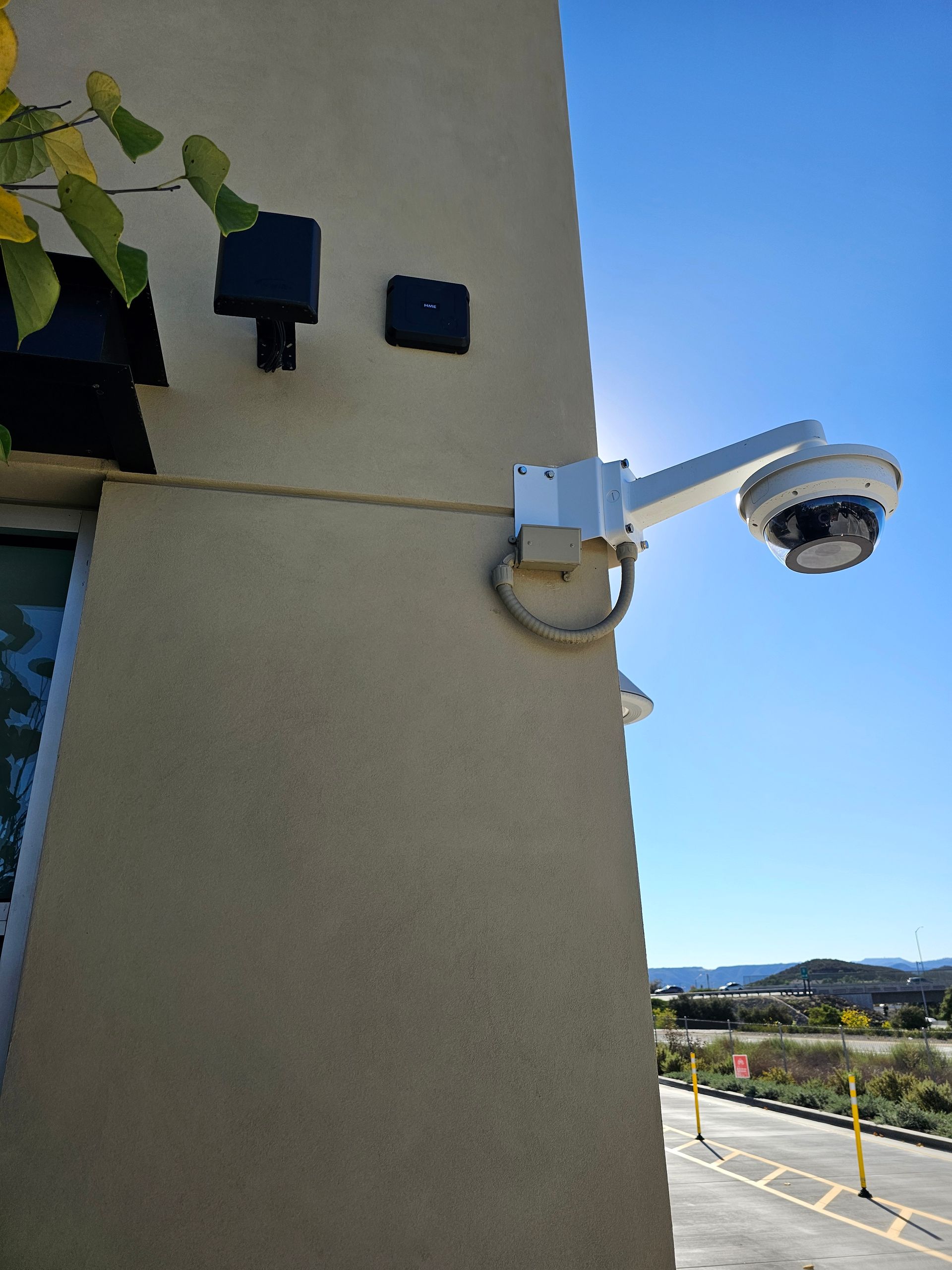
Cameras That Identify Threats Without Constant Human Monitoring
AI CCTV Systems in Lake Forest for commercial facilities requiring automated threat detection and intelligent motion analysis
Traditional CCTV systems record everything but require human review to identify security events, which means threats often go unnoticed until someone manually searches through hours of footage after an incident has already occurred. AI-powered systems analyze video in real-time, distinguish between routine activity and genuine security concerns, and generate automated alerts when specific conditions trigger detection protocols—such as vehicles entering restricted areas, people loitering near entrances after hours, or objects removed from designated zones. Turn Up Communications installs these systems across California for commercial facilities, retail operations, and fleet management where 24/7 accountability matters but continuous human monitoring proves impractical or cost-prohibitive.
Installation involves positioning cameras for optimal AI coverage that captures sufficient detail for object recognition, integrating the system with existing network infrastructure that handles the increased data processing requirements, and configuring motion detection protocols and alert thresholds that match your facility's specific security priorities. The AI processes video locally at each camera or through a central server depending on system architecture, reducing false alerts caused by environmental factors such as moving shadows, passing wildlife, or weather conditions.
Schedule a system design consultation to evaluate AI camera placement and determine detection protocols appropriate for your facility's security requirements.

What Changes After AI Detection Protocols Activate
AI CCTV systems analyze each video frame for objects, people, and vehicles, then compare detected activity against configured rules that define normal versus concerning behavior patterns. When a camera detects a person entering a restricted zone, the system evaluates whether that person matches authorized personnel profiles, checks whether the access occurred during permitted hours, and generates an alert if the activity violates established protocols. This analysis happens continuously without requiring security personnel to watch every screen simultaneously, which allows smaller security teams to monitor larger facilities effectively.
Once the system operates, your facility benefits from immediate notifications when genuine security events occur, reduced time spent reviewing irrelevant footage triggered by routine activity, and searchable video archives organized by detected objects rather than just timestamps. Security staff receive alerts on mobile devices with thumbnail images showing what triggered the detection, management reviews activity reports showing traffic patterns and access violations, and investigators locate specific incidents by searching for object types rather than manually scanning through hours of continuous footage.
The configuration includes setting detection zones that focus AI analysis on high-priority areas while ignoring routine activity in public spaces, defining alert escalation rules that notify different personnel based on threat severity, and establishing retention policies for flagged footage that extends beyond standard recording durations. Turn Up Communications' statewide California service capability demonstrates technical depth across diverse commercial environments from retail to industrial facilities.
Answers to Frequent AI CCTV Questions
Commercial facilities considering AI-powered surveillance often need clarity about how intelligent detection differs from traditional motion-triggered recording.
How do AI systems reduce false alerts compared to standard motion detection?
AI systems distinguish between object types and analyze behavior patterns rather than triggering on any movement, which means passing vehicles, tree branches swaying in wind, or shadows moving across monitored areas no longer generate alerts that interrupt security personnel.
What network infrastructure supports AI video processing?
AI CCTV systems require network switches with sufficient bandwidth to handle video streams from multiple cameras simultaneously, typically gigabit Ethernet connections, and Power over Ethernet capability to simplify camera installation without separate power runs to each location.
When do Lake Forest facilities benefit most from AI-powered surveillance?
Facilities with large monitoring areas that exceed traditional security staff capacity, operations requiring after-hours monitoring without overnight personnel, and businesses needing specific event detection such as vehicle counting or zone breach alerts gain the most immediate value from AI capabilities.
What detection capabilities separate AI systems from standard cameras?
AI systems recognize and classify objects including people, vehicles, and packages, detect specific behaviors such as loitering or running, count objects crossing defined boundaries for traffic analysis, and identify when objects appear or disappear from monitored zones.
Why does camera placement affect AI detection accuracy?
AI systems require clear views of monitored subjects with sufficient resolution to analyze details such as clothing or vehicle characteristics, and cameras positioned too high or at extreme angles reduce detection accuracy because the system cannot extract identifying features from poor viewing angles.
Turn Up Communications installs AI-powered CCTV systems with intelligent detection protocols and automated alert configuration for commercial facilities throughout California. Arrange a facility assessment to review detection requirements and camera placement for your Lake Forest operation.