
Infrastructure That Keeps Operations Connected
Network Cabling in Lake Forest for commercial and industrial facilities requiring redundant connectivity and outdoor-rated infrastructure
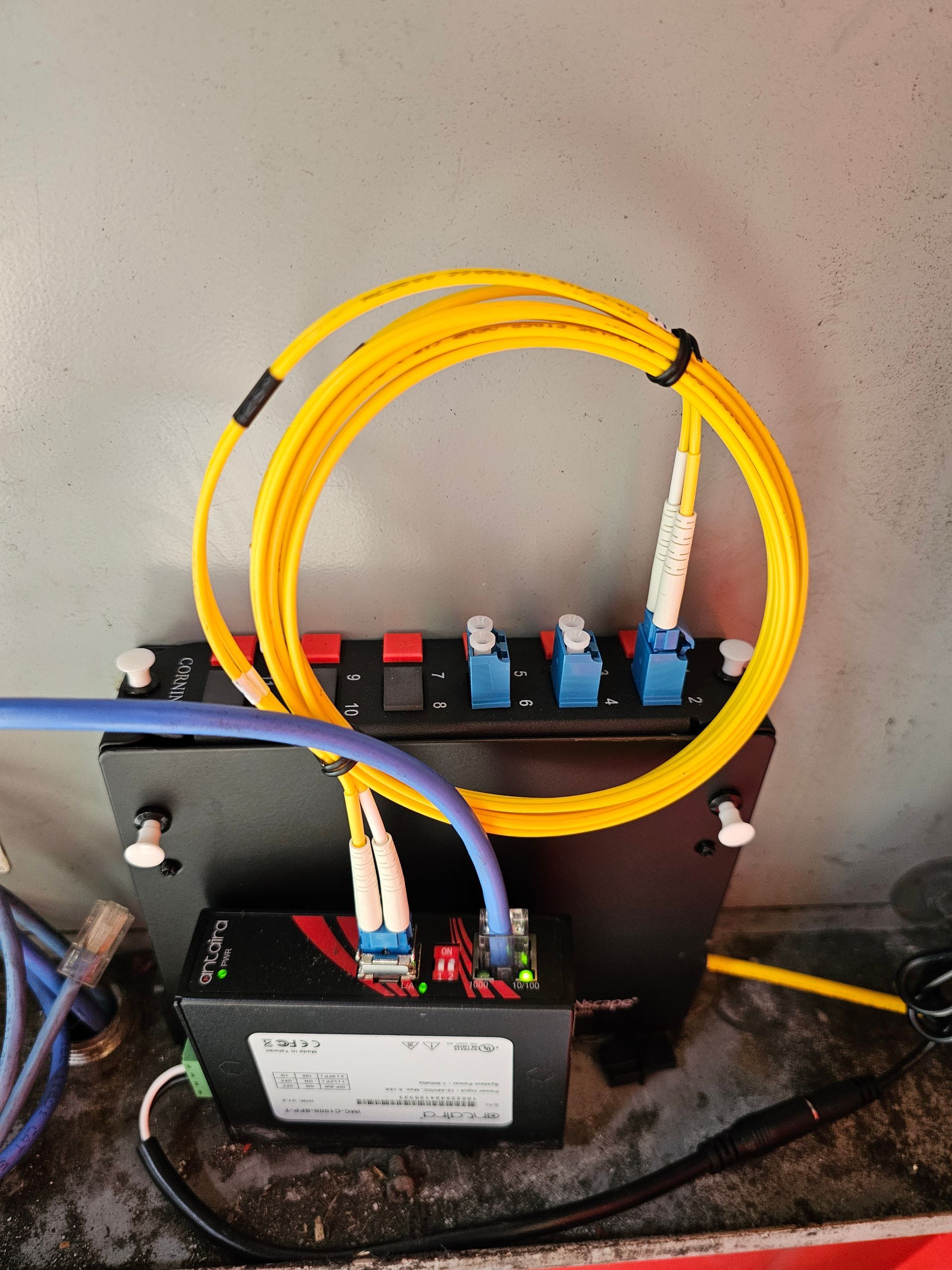
Manufacturing plants, warehouses, and distributed office environments depend on redundant network paths to prevent single points of failure that halt production or disable critical systems. Turn Up Communications installs Ethernet cabling and connectivity infrastructure across Lake Forest and throughout Orange County, routing cables through conduit, integrating network switches, and validating performance across LAN, internet, and unified communications systems. Outdoor-rated cabling withstands UV exposure and temperature fluctuations in Southern California climates, which matters when network infrastructure spans multiple buildings or connects exterior equipment like IP cameras and gate controllers.
Network cabling installation starts with a site survey that maps equipment locations, identifies pathway constraints, and determines whether direct burial, aerial runs, or conduit placement best serves each cable segment. Ethernet termination follows TIA/EIA standards to maintain signal integrity across distances up to 100 meters, and network switch integration ensures that each drop receives power-over-Ethernet when needed for wireless access points, cameras, or VoIP phones. Performance validation tests link speed, packet loss, and latency to confirm that installed infrastructure supports operational requirements before systems go live.
Arrange a site survey to evaluate your facility's layout, equipment placement, and redundancy requirements for a network cabling plan tailored to operational continuity.

What Proper Installation Requires
Network cabling projects involve decisions about cable routing that balance cost, accessibility, and protection from physical damage or environmental exposure. Indoor cable runs follow ceiling pathways, cable trays, or in-wall conduit, while outdoor runs require UV-resistant jackets and either underground conduit or weatherproof aerial mounting. Each termination point uses modular connectors tested for continuity and proper pin-out configuration, and every cable is labeled at both ends to simplify future troubleshooting or expansion.
Once installation completes, you'll notice that each network drop provides consistent link speeds, devices connect without dropout or intermittent failures, and switches report clean connectivity status for every port. Redundant pathways mean that a single cable failure doesn't disable entire zones, which matters in environments where downtime interrupts production schedules or customer access. Facilities in Irvine, Mission Viejo, Laguna Hills, and Dana Point benefit from the same standards that support high-availability operations across distributed buildings and outdoor installations.
Installation includes conduit placement where cables cross high-traffic areas or outdoor zones, proper grounding for outdoor-rated cables, and documentation that maps each drop to its corresponding switch port. Projects at warehouses and manufacturing sites often require shielded cabling to reduce interference from motors, variable frequency drives, or other electrical equipment. Network switch configuration and VLAN segmentation fall outside cabling scope but directly affect how installed infrastructure supports security, guest access, and departmental separation.
Answers to Frequent Service Questions
Network cabling projects raise questions about routing options, performance expectations, and how installed infrastructure integrates with existing systems. The following addresses common concerns.
What's the difference between indoor and outdoor-rated network cable?
Outdoor-rated cable uses UV-resistant jackets and moisture barriers that prevent degradation in sunlight and temperature swings; indoor cable lacks these protections and will fail prematurely when exposed to outdoor conditions common in Lake Forest's climate.
How do you route cables between buildings without trenching?
Aerial cable runs use messenger wire or conduit mounted to building exteriors, avoiding excavation costs while providing a protected pathway; this approach works well for connecting warehouse facilities, parking structures, or buildings separated by paved areas.
Why do some network drops require shielded cable?
Shielded cable reduces electromagnetic interference in environments with motors, welding equipment, or high-voltage lines nearby; unshielded cable in these settings experiences signal degradation that causes packet loss and reduced speeds even when termination is correct.
What does performance validation testing measure?
Testing measures link speed, packet loss, cable length, and signal strength to confirm that each drop operates at its rated capacity; switches also report negotiation status to verify that installed infrastructure supports gigabit speeds without fallback to slower modes.
How does redundant cabling prevent downtime?
Redundant pathways provide alternate routes between switches and critical equipment, so severing one cable during construction or equipment failure doesn't disable entire zones; this configuration requires additional up-front cost but eliminates single points of failure that halt operations.
Turn Up Communications handles network cabling projects across facilities with varied layouts, environmental exposures, and operational demands. Contact us to schedule a site evaluation and discuss pathway options, cable specifications, and integration with your existing network infrastructure.